
Composite Fillings
After cavities are cleaned, a composite filling is used to “patch up” the cavity that bacteria leave behind when they infect the tooth. Composite fillings are safe and shaded to match the color of the tooth.

Restorative procedures help protect both oral health and overall health while improving the appearance of the patient’s smile. Being able to properly chew food and having correct bite alignment affect a patient’s health in ways that go beyond just a smile. When restoring damaged, broken, and decayed teeth, the goal is to return the tooth to its original strength, function, and esthetic. Biomimetic dentistry, which is defined as the reconstruction of teeth to emulate their natural biomechanical and esthetic form and function, accomplishes all of this in a conservative approach with strong and attractive results.
After cavities are cleaned, a composite filling is used to “patch up” the cavity that bacteria leave behind when they infect the tooth. Composite fillings are safe and shaded to match the color of the tooth.

A dental crown is an artificial replacement that restores missing tooth structure by surrounding the remaining coronal tooth structure after the decay is removed from the tooth. Crowns are necessary when the tooth is broken down to the point where a filling won’t be effective. In order to effectively place a crown, tooth structure may be taken away to help create an esthetically pleasing fit.

A dental bridge replaces missing teeth without the use of a denture or dental implant. A false tooth is held in place by being attached to a neighboring tooth. In order to fabricate a bridge, crowns are made for the teeth on either side of the space and a false tooth is placed in between the crowns, which act as supports.

Porcelain veneers are thin pieces of porcelain used to recreate the natural look of teeth. To place a veneer, a very small amount of the original tooth enamel must be removed. Afterwards, an adhesive layer is placed between the slightly prepped tooth and the veneer. The veneer is then hardened with a curing light.
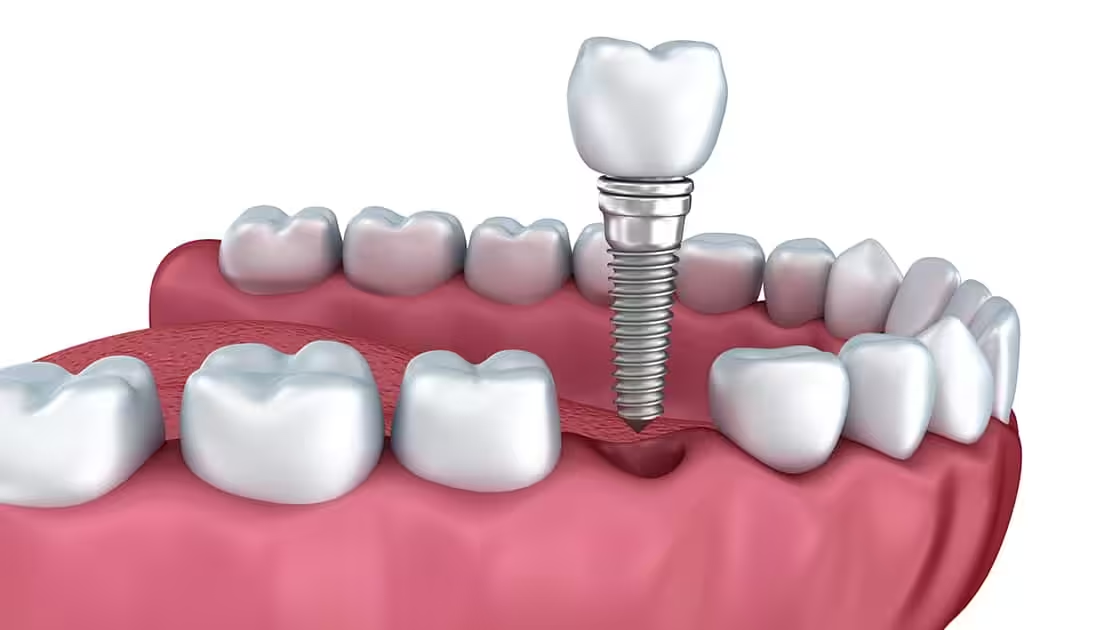
Dental implants are the replacement of tooth roots in the mouth. Implants provide a strong foundation for fixed or removable replacement teeth. Dental implants, which are placed in the jawbone, are small anchors made of a biocompatible metal called titanium. The anchors begin to fuse with the bone over the course of a few months. After the fusing process, known as osseointegration, abutment posts are inserted into the anchors to allow for the permanent attachment of the replacement teeth.

An extraction is the process of removing a tooth or tooth parts. To perform an extraction, the area is anesthetized to minimize discomfort and the tooth is then rocked back and forth until it is removed from its socket.
Contact our office today to request your appointment!

ADDRESS
PHONE
Tel:
Fax: